
Historisches Museum Basel Jahresbericht 2008

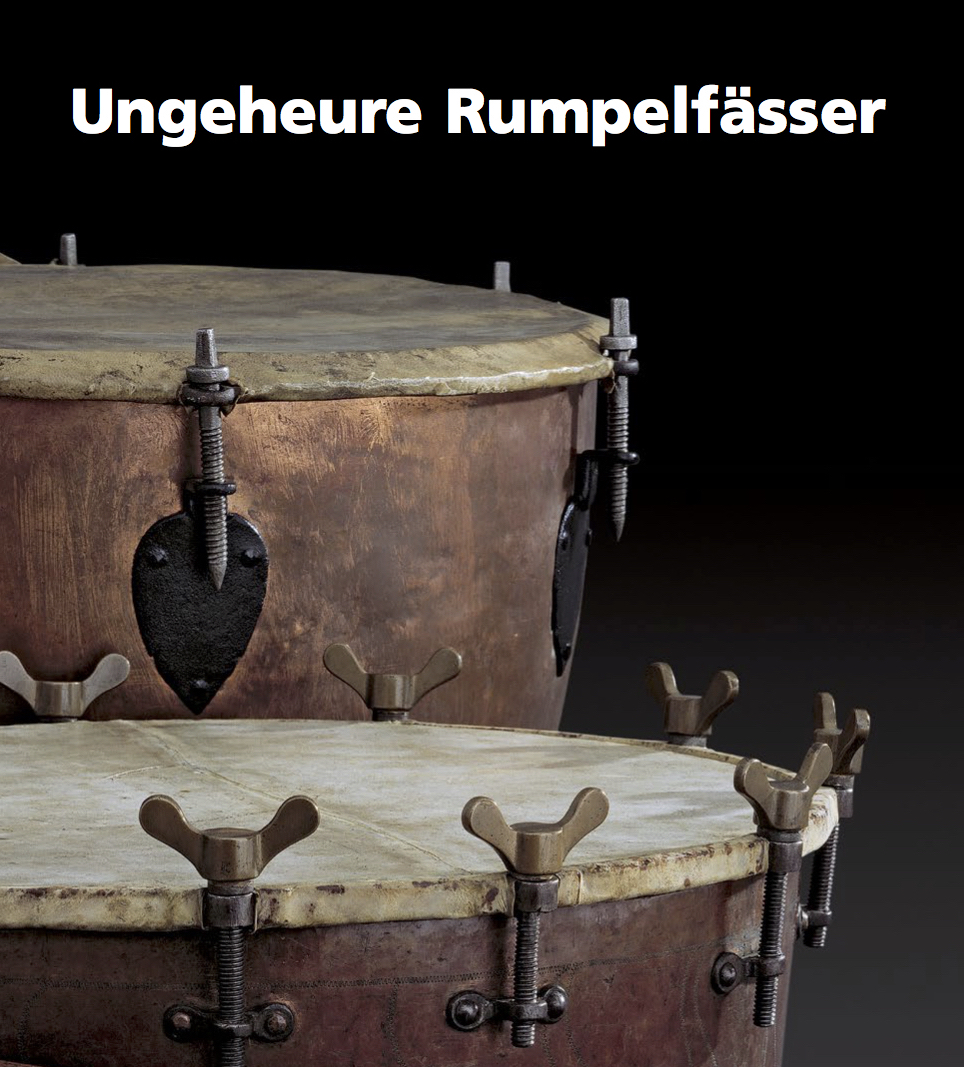
What are the origins of the theory that timpani bowls are harmonic cavity resonators? The misconception of the bowl being a true air cavity resonator likely started innocently enough as many of the early instrument developers and musicians did not have an understanding of musical acoustics and assumed through deduction that the timpani bowl served the same function as that of the body of many instruments.
That assumption was reinforced by the broader 19th-century fascination with acoustic resonance and the growing popularity of cavity-resonator concepts. It is easy to see how a large, hollow bowl could be interpreted as a “sound chamber,” especially when it clearly changes what the listener hears in terms of projection, sustain, and tonal color. But timpani are tuned across a wide range while the bowl volume remains essentially fixed, an important clue that the bowl is unlikely to behave as a strong pitch-following resonator across the instrument’s usable compass.
By the late 1870s, more rigorous acoustical thinking, especially Lord Rayleigh’s work on sound radiation and vibrating systems (with The Theory of Sound appearing in 1877–1878), helped shift explanations away from analogy and toward mechanism. From that point on, the question is no longer simply “Does the bowl resonate?” but “How did the instrument evolve so that pitch could become clearer, more stable, and more controllable in real musical settings?” That evolution, driven by changing repertoire, performance spaces, materials, and engineering choices, is the focus of the next section.
NB The original contents of this section has been moved to a new section: